A Practical Guide to Scissor Lifts: Types, Safety, and Maintenance
Scissor lifts turn hard-to-reach tasks into straightforward work, but choosing and using them wisely takes know‑how. This guide breaks down types, safety essentials, and maintenance habits so you can plan jobs with confidence. You’ll learn how to read spec sheets, avoid common hazards, and keep equipment running smoothly. Whether you rent or own, these insights help you work higher with fewer surprises.
Related searches

A Practical Guide to Scissor Lifts: Types, Safety, and Maintenance
Introduction
Scissor lifts make elevated work more predictable, more
efficient, and, when used correctly, safer than ladders or
improvised platforms. From facility upkeep to construction punch
lists, they deliver stable reach with straightforward controls.
This guide explains how they work, how to choose the right
model, how to operate them responsibly, and how to keep them in
reliable shape.
Outline
– Types and mechanisms: what’s inside the scissor stack
and common powertrains
– Safety essentials: planning, pre-use checks, and
wind/slope rules of thumb
– Spec sheet decoding: heights, capacities, tires,
batteries, and noise
– Maintenance and troubleshooting: intervals, fluids, and
fault patterns
– Costs, logistics, and trends: rent vs. buy, transport,
sustainability, and closing advice
Types and Mechanisms: How Scissor Lifts Deliver Vertical Reach
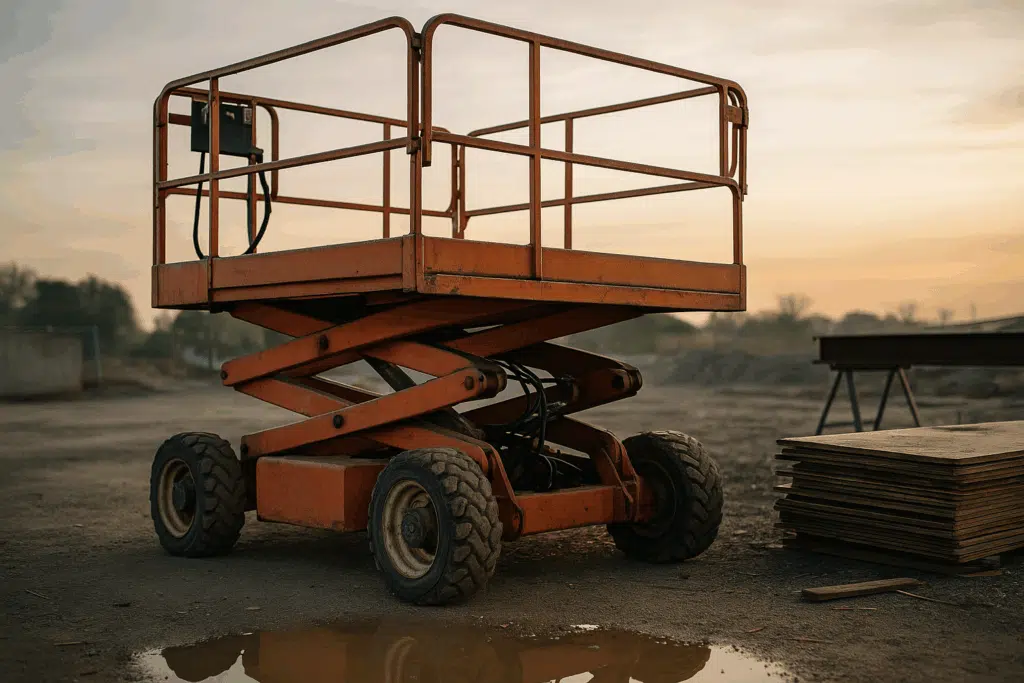
At a glance, a scissor lift looks simple: a stout platform riding on a crisscross stack. The elegance lies in the linkage. That stack is a pantograph mechanism that converts the horizontal push of a hydraulic cylinder (or a screw drive) into vertical motion. Because the force is distributed across multiple arms and pivots, the platform rises evenly with notable rigidity, which is why scissor lifts feel stable compared with many other aerial devices. Under the deck, you will usually find an electric or internal‑combustion powerpack driving a pump, control valves, and safety lockouts that prevent unsafe movement.
Common categories include slab electric units for finished floors and rough‑terrain units for construction sites. Slab models are compact, with non‑marking tires and tight turning circles, making them suitable for warehouses, retail fit‑outs, and maintenance corridors. Typical platform heights range from about 6 to 14 meters (roughly 20 to 45 feet), with platform capacities often between 230 and 450 kilograms. Because they run on batteries, they produce no tailpipe emissions and operate quietly, a plus in sound‑sensitive spaces. Rough‑terrain units, by contrast, trade compactness for clearance, gradeability, and larger decks. Their platform heights commonly reach 10 to 18 meters, with capacities in the 450 to 700 kilogram range. Many add four‑wheel drive, oscillating axles, and foam‑filled or air‑filled lug tires to keep moving over gravel and mud.
Powertrains vary by job demands. Electric scissor lifts use battery banks feeding DC or AC drive motors and hydraulic pumps. They are favored indoors due to lower noise and ventilation requirements. Hybrid configurations pair battery systems with efficient engines that charge on the go, reducing idling and fuel use on mixed indoor/outdoor projects. Diesel or gasoline power suits open‑air sites where long duty cycles and travel between work zones are common. Mechanical alternatives exist—such as screw‑driven lifts—and pneumatic variants show up in specialized applications where oil‑free operation matters, but hydraulics dominate the mainstream because they deliver controlled motion and hold position with load‑holding valves.
Choosing among these types is about context. If your work spans polished floors and tight aisles, a narrow electric model may shine. If you need to carry heavy materials with multiple crew members across uneven grades, a high‑capacity rough‑terrain platform will feel more at home. The good news: the scissor format scales well, so the operating principles stay familiar as you move up or down the size chart. When you grasp how the pantograph behaves under load and how the powerpack feeds it, you gain a practical sense for what any scissor lift can and cannot do.
Key practical distinctions to keep in mind:
– Slab electric: compact footprint, low noise,
non‑marking tires, indoor ventilation friendly
– Rough‑terrain: higher ground clearance, greater
gradeability, larger decks, outdoor focus
– Hybrid/electric RT: reduced emissions on tougher
sites, extended runtime flexibility
– Specialized drives: screw or pneumatic for niche,
oil‑free, or precision environments
Safety Essentials: Planning, Wind and Slope Limits, and Day‑to‑Day Discipline
Safe scissor‑lift use begins before the platform leaves the ground. A thoughtful plan covers surface conditions, overhead hazards, weather, and the exact tasks to be performed. Start with the ground: scissor lifts rely on level, load‑bearing support. Concrete slabs are rarely an issue if you respect posted floor load limits, but composite floors, pavers, trenches, or soil backfill can be deceiving. On rough terrain, confirm compaction and avoid voids and edges. When in doubt, spread the load with mats or reroute the task. Overhead, identify electrical lines, low beams, sprinklers, and signage. The safest approach is to maintain clearance and, if necessary, formalize a lockout or buffer zone.
Wind and slope rules matter. Many manufacturer plates list a maximum allowable wind speed around 12.5 m/s (about 28 mph) for outdoor operation; above that, the risk of tipping or guardrail contact rises sharply. If a lift is labeled for indoor use only, treat any wind as an added hazard and avoid exposure. When elevated, most scissor lifts tolerate only slight side‑to‑side slope—often a few degrees—so always level first and never attempt to drive across a notable cross‑slope while raised. The pothole protection system, if fitted, lowers stabilizing bars that effectively reduce clearance; verify it deploys before leaving the stowed position.
Daily checks build a margin of safety. A short routine pays
off:
– Walk‑around: look for hydraulic leaks, damaged rails,
loose fasteners, and tire cuts
– Function test: raise/lower, drive/steer, emergency
stop, horn, and descent override
– Platform: confirm gate latches, toe boards,
guardrails, and deck extensions lock securely
– Controls: verify decals and labels are legible and
switches return to neutral
– Batteries/fuel: enough charge or fuel for the planned
duty cycle; charging cable stowed
On the platform, secure materials, distribute weight evenly, and respect the rated capacity. Guardrails are the primary fall protection; avoid climbing or sitting on them to gain extra height. Use the deck extension rather than leaning. If tools or materials are prone to catching wind, keep their profile low or store them until conditions calm. Maintain clear communication with a spotter when maneuvering near obstacles, and never let pedestrians or co‑workers linger beneath the platform.
Training should cover not just control layout but hazard perception: reading the ground, gauging wind, visualizing swing and roll as the deck rises, and recognizing when a job calls for a different machine. Finally, keep an emergency plan simple and visible—who calls, who guides the ground‑level descent, and where the nearest first‑aid kit and fire extinguisher are located. The safest crews build habits that make the extraordinary unnecessary.
Spec Sheets Decoded: Heights, Capacities, Tires, Noise, and Power
Spec sheets can look like alphabet soup until you map each figure to a real‑world decision. Start with height. Platform height is the vertical distance from the ground to the deck; working height adds roughly 2 meters (about 6.5 feet) to reflect average reach above the platform. If the task calls for 9 meters of working height, a model with a 7‑meter platform rating is typical. Always add a safety buffer; straining for the last few centimeters encourages risky behaviors like overreaching or climbing guardrails.
Capacity ratings combine people and tools, usually stated in kilograms. They are not suggestions. Exceeding them reduces stability and can overload the linkage and cylinder anchors. Also note the restricted capacity on deck extensions; it is often lower than the main platform’s rating. Tie this to deck size: a larger platform improves workflow for tasks like duct installs or signage but increases overall weight and floor loading. Calculate whether the structure can support the machine. Ground pressure is especially relevant on mezzanines and areas with unknown reinforcement.
Drive and steer performance affect productivity. Gradeability figures tell you what slope the unit can climb while stowed; rough‑terrain models often sit in the 30% to 40% range, while slab units are lower. Be cautious: this does not translate to allowable slope when elevated. Turning radius—sometimes zero for certain compact designs—matters in aisles and between fixtures. Travel speed is modest by design; the gain in efficiency comes from fewer repositioning steps, not fast transit.
Tire choices shape both traction and housekeeping. Non‑marking tires protect finished floors but trade some grip, especially when dusty. Lug or foam‑filled tires on outdoor models add puncture resistance and bite in loose material. For mixed environments, look for tread that sheds debris without leaving streaks.
Power and runtime are next. Electric units use battery banks measured in amp‑hours; higher capacity generally means more cycles per charge, but temperature and duty cycle (how often you raise and drive) can swing results widely. Plan mid‑shift charging if possible. Internal‑combustion units list tank size and fuel type; consider refueling logistics and local emissions rules. Noise levels typically sit around conversational to loud‑conversation levels for electric (often in the 65–75 dB range at operator position) and higher for combustion. Where noise limits apply—hospitals, schools, performing arts spaces—quiet operation can be the deciding factor.
Quick selection tips:
– Translate task reach into platform height + a
comfortable buffer
– Match capacity and deck size to crew count and
material handling
– Verify floor loading, ground pressure, and turning
radius for the site
– Consider noise/emissions rules and charging or
refueling access
– Choose tires for the surface you’ll drive on most of
the day
Maintenance and Troubleshooting: From Daily Care to Seasonal Readiness
Reliability starts with small, consistent habits. A daily walk‑around catches issues while they are cheap and easy to fix. Wipe any hydraulic drips and trace them to fittings or hoses; what looks like a smudge today can become a lost shift tomorrow. Check battery cables for corrosion and tightness. For flooded lead‑acid batteries, maintain electrolyte levels and keep vent caps clear. Clean the top of the battery bank so stray conductive grime doesn’t invite shorting. If your fleet includes sealed AGM or lithium packs, follow the manufacturer’s charging profile and storage temperature limits to preserve cycle life.
Lubrication and fluids deserve a schedule. Keep pivots and sliding pads greased per the service manual, and watch for uneven wear that hints at misalignment. Hydraulic fluid viscosity should track the climate; lighter grades flow better in cold conditions, while heavier grades resist thinning in heat. Replace filters on interval to protect valves and pumps from debris. Inspect tires for cuts and chunking; foam‑filled tires hide slow failures, so look for sidewall bulges and wheel damage after harsh ground contact. For rough‑terrain units, clean the radiator and cooling airways; dust buildup degrades thermal performance and shortens component life.
Common fault patterns are remarkably consistent:
– Won’t lift: low battery voltage, tripped circuit
protection, or relief valve stuck open
– Drifts down: load‑holding valve leak‑by, cylinder seal
wear, or micro‑leak in lines
– No drive/steer: joystick signal fault, hydraulic
enable not engaged, or travel interlock active
– Pothole protection won’t retract: debris jammed in
mechanism or bent linkage
– Platform not level: worn bushings or unequal tire
pressures, especially with deck extensions
When troubleshooting, reproduce the symptom step by step and use the built‑in diagnostics if available. Many lifts provide simple error codes through indicator lights or a basic display. Document hours, ambient temperature, load conditions, and recent maintenance; patterns emerge faster when details are written down. If a lift repeatedly flags low voltage under load, load‑test the battery bank instead of relying on open‑circuit readings. For hydraulic concerns, measure pressure at test ports to confirm whether the pump is achieving spec and whether a relief is opening early.
Seasonal readiness matters, too. In cold weather, pre‑warm batteries, consider a lighter hydraulic oil, and keep chargers in environments within their temperature band. In hot weather, prioritize shade during charging, check coolant levels on combustion powerpacks, and mind tire pressures as heat expands air. Store lifts clean and dry, with batteries at proper state of charge; long storage at low charge shortens life. A tidy maintenance log—dates, work performed, who signed off—pays dividends at resale and during audits.
Related searches
Costs, Logistics, Trends—and A Practical Conclusion for Crews and Managers
Whether to rent or own hinges on utilization. If a lift will roll weekly on recurring tasks—filter changes, lighting, signage updates—ownership can be efficient, particularly for electric slab units with low operating costs. For seasonal construction peaks or tasks needing specialized height or capacity, rental keeps capital free and matches the machine to the moment. Run a simple model: expected hours per month, rental rates in your region, transport fees, and the cost of a missed deadline due to equipment unavailability. Factor service coverage; rentals often include rapid swaps that minimize downtime.
Logistics shape daily productivity. Measure doorways, elevators, and tight turns well before a delivery truck shows up. Confirm the trailer rating and anchor points if you transport in‑house. Tie‑down with frame‑rated points, not guardrails. On projects with limited laydown space, coordinate charging or refueling to off‑peak hours. If indoor air is a concern, plan battery‑electric units and keep cords or charging bays out of pedestrian routes. Where noise limits apply, schedule the quiet work closest to occupied areas and push louder tasks to windows when occupancy is low.
Environmental and community considerations are gaining weight. Battery‑electric rough‑terrain models and hybrids reduce emissions and can open doors to sites with stricter rules. Low‑odor hydraulic fluids and spill‑response kits demonstrate stewardship and reduce cleanup risk. Telematics—hour meters, location, and basic fault codes—help larger fleets optimize maintenance and curb unnecessary idling or travel. Load‑sensing systems, more precise traction control, and improved diagnostics are becoming common, making operations smoother and service more predictable.
Conclusion: If you manage facilities, run a contracting crew, or lead maintenance, a scissor lift is often the most straightforward path to safe, repeatable work at height. Start with the task: height and reach, surface conditions, and material handling. Match a machine to those needs, not the other way around. Build a safety routine that treats wind, slope, and ground conditions as non‑negotiable. Keep a lean tool kit—battery tester, pressure gauge, grease gun, and a good logbook—and you’ll prevent small issues from growing into costly delays. With the right selection, discipline, and care, a scissor lift becomes a steady partner that lets your team focus on the work that matters.
Quick planning checklist for your next job:
– Define working height and capacity, then add a comfort
buffer
– Verify floor loading and travel path widths from
delivery point to work zone
– Choose tires and powertrain for the predominant
surface and noise limits
– Schedule charging or refueling and assign a daily
inspection owner
– Confirm weather plan and emergency descent
responsibilities